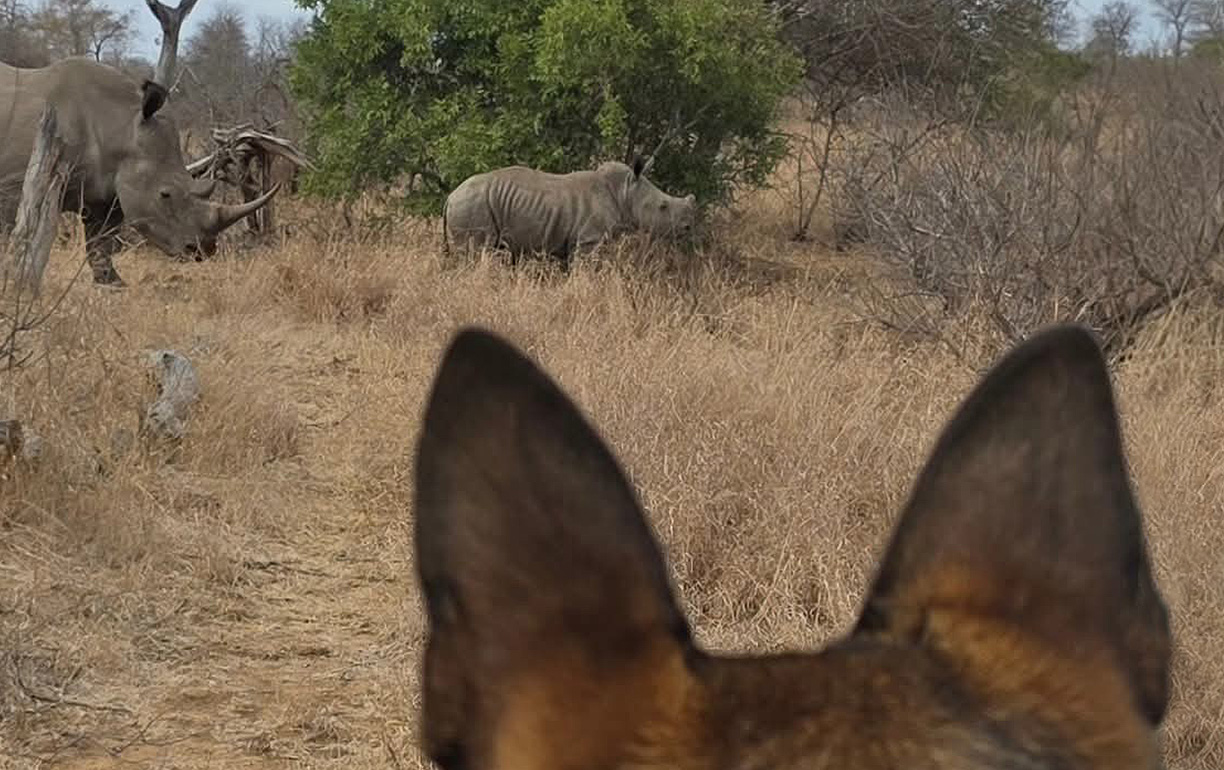
Paws against poaching
When a dog from the "Save the Rhino" project in Frankfurt climbs into a transport box, it begins a journey that saves lives. Not in Europe, but thousands of kilometers away – in the deep bush of South Africa. There, the rangers of the anti-poaching units fight crime against nature on a daily basis. Their most powerful weapon? A dog's keen sense of smell. Lufthansa Cargo brings these four-legged heroes safely to their destination. With experience, responsibility, and heart.
The situation in South Africa: Poaching knows no borders.
Every 20 hours, a rhino is killed in South Africa. Official figures put the number of animals still in existence at around 13,000 – in 2012, there were over 22,000. The reason for their demise: their horns. It is traded for sums of up to 50,000 euros per kilogram, mainly in Asia, as a status symbol or supposed remedy. It has long been scientifically proven that the horn is made of keratin, just like our fingernails or our hair. But demand continues to be high.
Poachers are brutal. They break into reserves at night, shoot the animals, and leave their carcasses behind. It is not just rhinos that are affected – elephants, pangolins, and other endangered species are also being targeted. “Looking away is not an option for us,” says Perdita Lübbe-Scheuermann, founder of the "Save the Rhino" project and dog trainer. Together with her husband Ralf, she has been running the dog academy near Darmstadt for over 30 years. For more than ten years, they have been fighting for species conservation in South Africa. “We want our children and grandchildren to see live rhinos – not just pictures in books.” The work is dangerous, expensive, and emotional. But it is effective: with every dog that tracks down weapons, ammunition, or horns, poaching becomes more difficult.
The situation in South Africa: Poaching knows no borders.
|
Every 20 hours, a rhino is killed in South Africa. Official figures put the number of animals still in existence at around 13,000 – in 2012, there were over 22,000. The reason for their demise: their horns. It is traded for sums of up to 50,000 euros per kilogram, mainly in Asia, as a status symbol or supposed remedy. It has long been scientifically proven that the horn is made of keratin, just like our fingernails or our hair. But demand continues to be high. |
“Looking away is not an option for us,” says Perdita Lübbe-Scheuermann, founder of the "Save the Rhino" project and dog trainer. Together with her husband Ralf, she has been running the dog academy near Darmstadt for over 30 years. For more than ten years, they have been fighting for species conservation in South Africa. “We want our children and grandchildren to see live rhinos – not just pictures in books.” The work is dangerous, expensive, and emotional. But it is effective: with every dog that tracks down weapons, ammunition, or horns, poaching becomes more difficult.
|
The sniffer dogs: From animal rescue to animal rescue
These four-legged heroes come from animal rescue. At the Viernheim animal shelter, the dog trainer is also involved in the “Start into a New Life” project. There, she selects suitable dogs: Malinois, German Shepherds, or mixed breeds—dogs with energy and a keen sense of smell. They are then trained together with her friend and fellow experienced trainer Nicole Tomera. The two receive support from the team at the dog academy, Matthias Mück, but also significantly from the police dog handlers. Lübbe explains: “We decided on detection dogs because protection dogs are too much in the line of fire.” The training is demanding: the animals learn to sniff out rhino horn, ivory, pangolin scales, ammunition, and weapons.
The sniffer dogs: From animal rescue to animal rescue
|
These four-legged heroes come from animal rescue. At the Viernheim animal shelter, the dog trainer is also involved in the “Start into a New Life” project. There, she selects suitable dogs: Malinois, German Shepherds, or mixed breeds—dogs with energy and a keen sense of smell. They are then trained together with her friend and fellow experienced trainer Nicole Tomera. |
The two receive support from the team at the dog academy, Matthias Mück, but also significantly from the police dog handlers. Lübbe explains: “We decided on detection dogs because protection dogs are too much in the line of fire.” The training is demanding: the animals learn to sniff out rhino horn, ivory, pangolin scales, ammunition, and weapons.
|
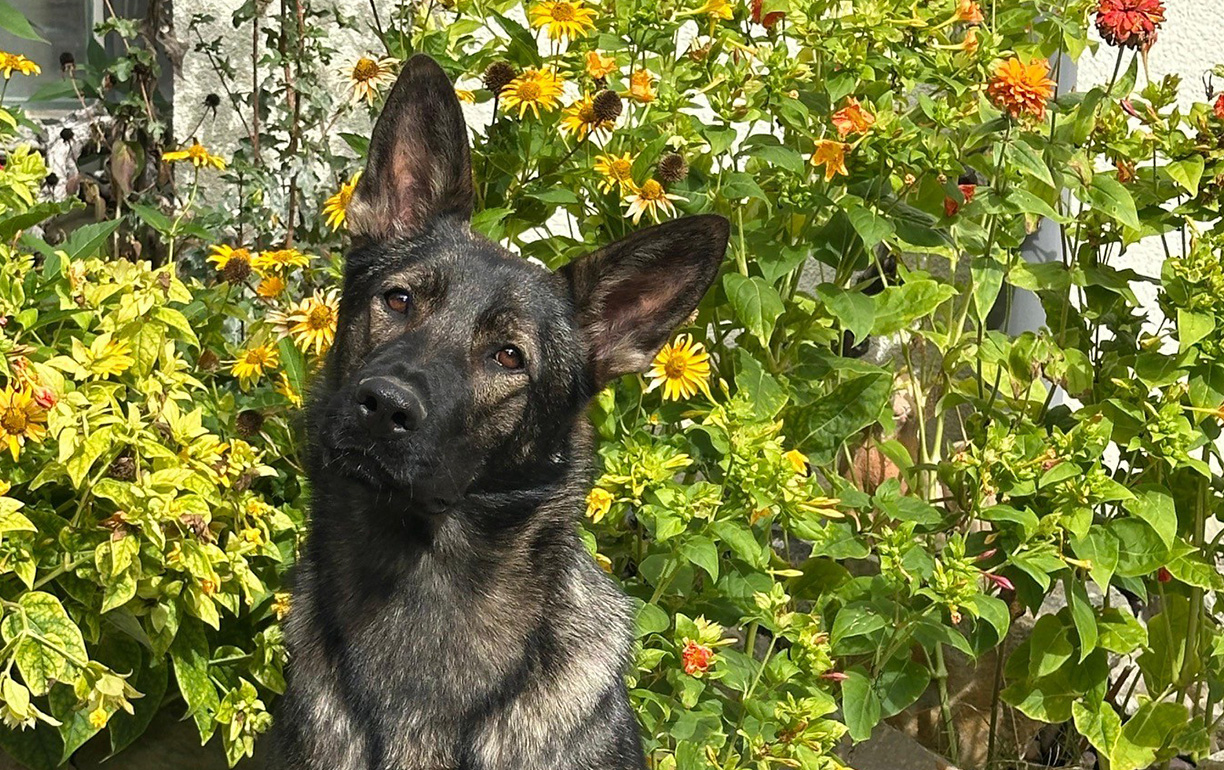
Each dog is given a meaningful name: Shaya (Strike), Sosha (Warrior), GOOOD's Calimero, GOOOD's Colins Matimba (Strength), GOOOD's Rihati (Lightning), GOOOD's Kulava Kutiva (Curiosity), GOOOD's Nyeleti (Star), and Tjures Hvalu (Bullet). GOOODs Risima (Significant) was the latest addition in September 2025. “It's always a moving moment when a dog boards the plane,” says Ralf. “It's not just flying to Africa – it's flying on a mission.”
Animal transport to South Africa: precision and responsibility
Transporting a dog to South Africa is no simple task. As flexible as Lufthansa Cargo's route network is, with multiple weekly connections from Frankfurt, Munich, and Zurich to Johannesburg or Cape Town, the import regulations are just as rigid. Before the journey begins, strict requirements must be met: vaccinations, blood tests, official veterinary health certificates. Five blood tests are mandatory for dogs – including tests for Brucella canis, Trypanosoma evansi, and leishmaniasis. These tests must be carried out in certified laboratories. For this alone, some of the blood taken from the dog must be sent to America. The results must be confirmed within a very narrow time frame so that they do not become invalid before the trip. Only when all documents have been checked does Lufthansa Cargo give the green light. Without the official veterinary health certificate, boarding is not possible.
Such transport is best accompanied by specialized animal forwarders. This is where AnimalLogistics FRA comes in. The internationally active logistics company based in Mörfelden-Walldorf near Frankfurt am Main specializes in the transport of live animals. Whether pets, zoo animals, or exotic species, the experienced team organizes safe, animal-friendly travel by air and land and takes care of all the organizational challenges. “We advise, organize, and accompany – right down to providing emotional support to the owners,” says Doris Mähn-Schinella, a specialist in the transport of live animals. For many people, it is difficult to part with their beloved dog for the duration of long-haul transport.
During the flight, the dogs travel in special boxes. The entire transport process complies with the strict provisions of the IATA Live Animals Regulations. Safety and well-being are the top priorities. “We bear responsibility – for every animal, for every life,” says Sandra Wedel, an employee at the Animal Lounge. And this responsibility does not end at the gate, but only when the dog has arrived safely in Africa.
Animal transport to South Africa: precision and responsibility
|
Transporting a dog to South Africa is no simple task. As flexible as Lufthansa Cargo's route network is, with multiple weekly connections from Frankfurt, Munich, and Zurich to Johannesburg or Cape Town, the import regulations are just as rigid. Before the journey begins, strict requirements must be met: vaccinations, blood tests, official veterinary health certificates. Five blood tests are mandatory for dogs – including tests for Brucella canis, Trypanosoma evansi, and leishmaniasis. These tests must be carried out in certified laboratories. For this alone, some of the blood taken from the dog must be sent to America. The results must be confirmed within a very narrow time frame so that they do not become invalid before the trip. Only when all documents have been checked does Lufthansa Cargo give the green light. Without the official veterinary health certificate, boarding is not possible. Such transport is best accompanied by specialized animal forwarders. This is where AnimalLogistics FRA GmbH comes in. The internationally active logistics company based in Mörfelden-Walldorf near Frankfurt am Main specializes in the transport of live animals. |
Whether pets, zoo animals, or exotic species, the experienced team organizes safe, animal-friendly travel by air and land and takes care of all the organizational challenges. “We advise, organize, and accompany – right down to providing emotional support to the owners,” says Doris Mähn-Schinella, a specialist in the transport of live animals. For many people, it is difficult to part with their beloved dog for the duration of long-haul transport. During the flight, the dogs travel in special boxes. The entire transport process complies with the strict provisions of the IATA Live Animals Regulations and the Convention on International Trade in Endangered Species. Safety and well-being are the top priorities. “We bear responsibility – for every animal, for every life,” says Sandra Wedel, an employee at the Animal Lounge. And this responsibility does not end at the gate, but only when the dog has arrived safely in Africa.
|
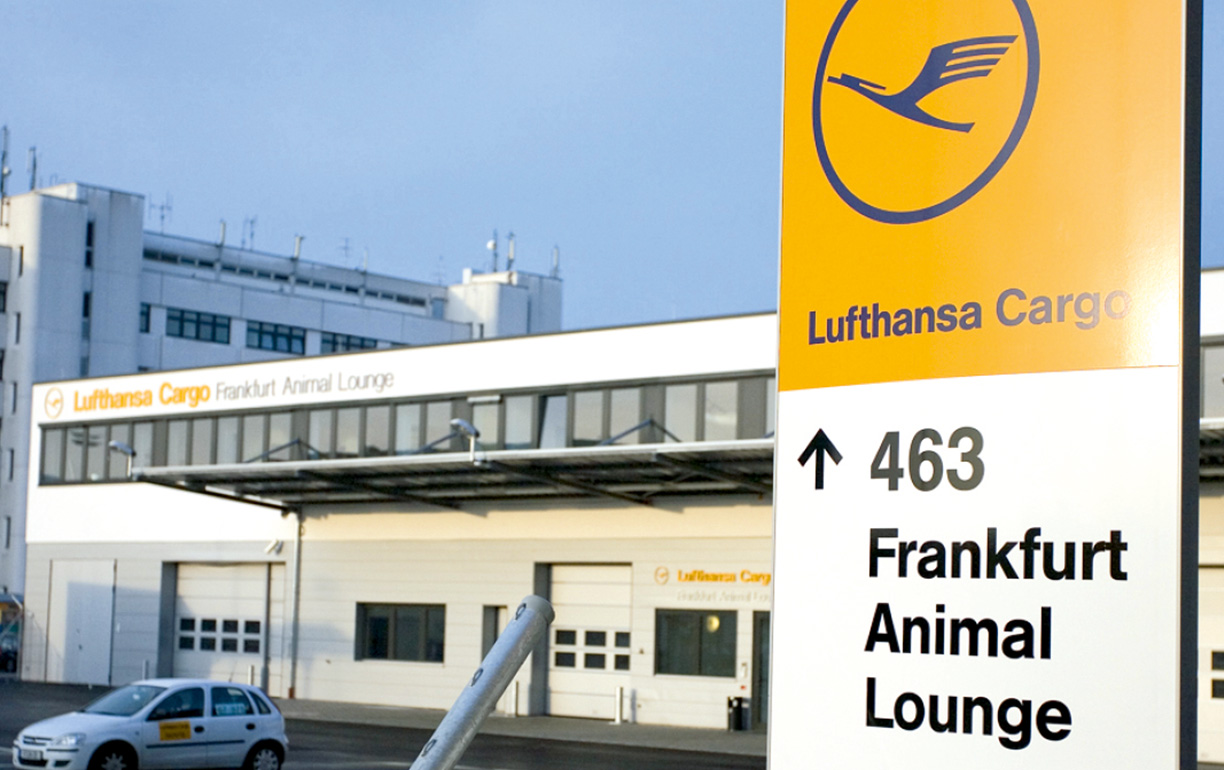
The Animal Lounge Frankfurt
The Lufthansa Cargo Animal Lounge at the Frankfurt hub is considered one of the most modern animal stations in the world – 4,000 m², specially designed for the safe and as stress-free as possible transport of animals. Here, handling, animal coordination, and veterinarians work under one roof, around the clock. A team of trained employees and qualified animal caretakers guarantees the best possible care. Import, export, and transit areas are structurally separated, with visual and sound insulation. “Whether it's the start of the journey, the destination, or transit, the stay in the Animal Lounge should be as stress-free as possible,” says Sandra Wedel. “We offer our premium service for pet transport, and owners receive additional photos of their four-legged friends from the Animal Lounge transit area, for example.” The Animal Lounge is more than just a waiting area – it is a promise: we do everything we can to make every animal feel as comfortable as possible.
With paws on South African soil
While the dog travels safely in his transport crate, Perdita and Ralf Lübbe-Scheuermann sit one floor above in the aircraft. They accompany the animals to their new home and spend several weeks there every year. In Africa, the dogs are welcomed with open arms and great warmth. After a few days of getting to know each other and settling in, the big moment arrives: the handover to their new dog handlers. From now on, Risima will be at Mike's side. It is a moment full of joy, but also with a tear in the eye for the Lübbe-Scheuermann family. After that, the first training sessions begin, and the dogs are introduced to those already living there. The dogs, which in their former lives often ended up in shelters due to their restless behavior, really blossom here among their fellow dogs and with a challenging, meaningful task.
With paws on South African soil
|
While the dog travels safely in his transport crate, Perdita and Ralf Lübbe-Scheuermann sit one floor above in the aircraft. They accompany the animals to their new home and spend several weeks there every year. In Africa, the dogs are welcomed with open arms and great warmth. After a few days of getting to know each other and settling in, the big moment arrives: the handover to their new dog handlers. |
From now on, Risima will be at Mike's side. It is a moment full of joy, but also with a tear in the eye for the Lübbe-Scheuermann family. After that, the first training sessions begin, and the dogs are introduced to those already living there. The dogs, which in their former lives often ended up in shelters due to their restless behavior, really blossom here among their fellow dogs and with a challenging, meaningful task.
|
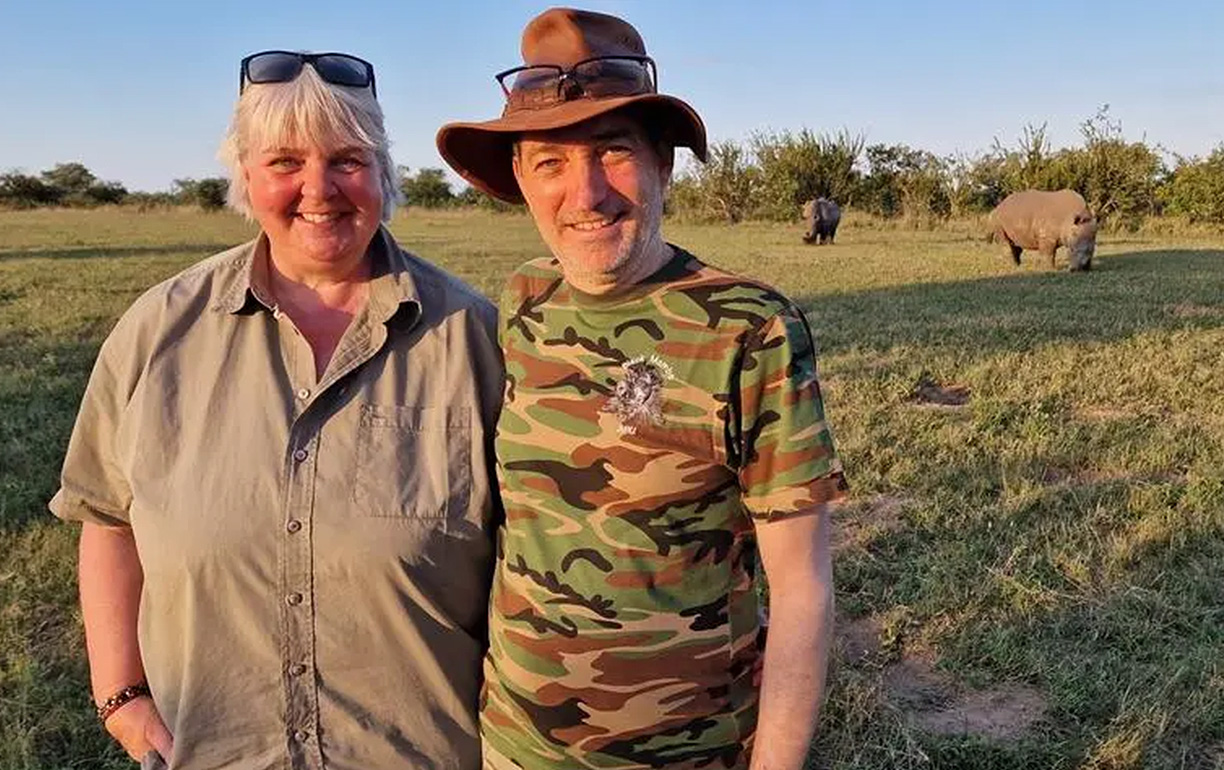
The project in South Africa: More than dogs
Save the Rhino is more than a fight against poaching—it is a holistic project. In addition to supporting the Black Mambas, South Africa's first female anti-poaching unit, Perdita and Ralf are involved in the villages surrounding the protected areas. The Khumba Ncila project builds wells for farm animals, provides feed, and finances veterinarians who care for cows, goats, and dogs on a daily basis. Rabies, parvovirus, and tuberculosis remain a problem. Castration campaigns prevent uncontrolled reproduction and disease.
In 2023, a veterinary clinic was opened – a milestone. “Now we can not only treat animals but also care for them in a clean environment over a longer period of time,” says Perdita. At the same time, the ‘Bushbabys’ education project is running: around 1,000 children are receiving environmental education. “Children are the future of wildlife conservation,” emphasizes Ralf.
But all of this costs money. Medicines, bandages, food – the list is long. “We won't save the world, but every single life counts,” says Perdita. Anyone who wants to help can follow the project and, of course, donate:
- Account: Animal Rescue, IBAN: DE59 6725 0020 0009 2924 20, BIC: SOLADES1HDB, Reference: Rettet das Nashorn
- PayPal: [email protected]
- Social media: facebook.com/RettetdasNashorn and instagram/rettet.das.nashorn
- Book: Proceeds from the children's book „Thambas großes Abenteuer: Wie ein kleines Nashorn gerettet wurde“ (ISBN 978-3737372985) also benefit the project.
Risima's journey was not the last. Timos Murindzi (security) and Dokas' Mutivi (specialist) are currently undergoing training at the Viernheim animal shelter and will fly to Africa at the end of April 2026. Lufthansa Cargo is proud to have already accompanied many of these journeys. Because species conservation knows no boundaries.
|
But all of this costs money. Medicines, bandages, food – the list is long. “We won't save the world, but every single life counts,” says Perdita. Anyone who wants to help can follow the project and, of course, donate:
|
Risima's journey was not the last. Timos Murindzi (security) and Dokas' Mutivi (specialist) are currently undergoing training at the Viernheim animal shelter and will fly to Africa at the end of April 2026. Lufthansa Cargo is proud to have already accompanied many of these journeys. Because species conservation knows no boundaries.
|
Published: 12/2025
Photos: Perdita and Ralf Lübbe-Scheuermann, Neil Whyte, Lufthansa Cargo