
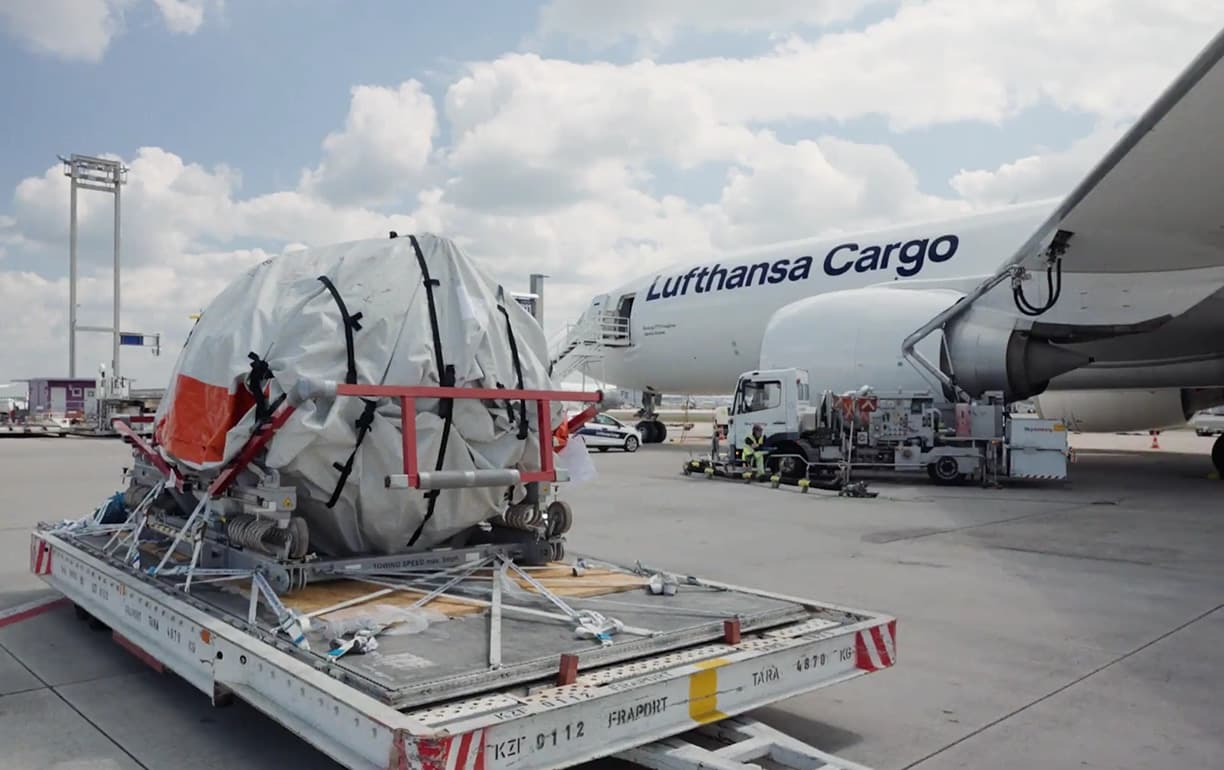
Engine Mission: Working together against the clock
When an aircraft is unexpectedly grounded, every minute counts. What begins as a technical problem can quickly have far-reaching consequences: travel plans are disrupted, supply chains are thrown off track, and deadlines come under pressure. In such moments, a race against time unfolds behind the scenes – one in which technical expertise, precise logistics, and reliable air freight must work together seamlessly. After all, the goal is to get things moving again as quickly as possible. This is exactly where the importance of strong partnerships becomes clear.
Watch the video to this story on our YouTube Channel.
When every minute counts: Aircraft on ground
An AOG – short for Aircraft on Ground – means an aircraft cannot take off due to a technical problem. What initially sounds like a single malfunction often sets off a whole chain of events: Flights are delayed or canceled, new solutions must be found for passengers and cargo, appointments fall through, delivery schedules come under pressure – and with every hour that passes, costs and complexity rise.
The priority is clear: The aircraft must be back in the air as quickly as possible. But the challenge lies not only in replacing the defective part, but above all in getting it to where it’s needed. In the business jet sector, where aircraft do not operate on scheduled routes, these destinations can often be unusual. And engines, in particular, are among the most demanding types of cargo: heavy, sensitive, highly precise – and capable of being transported only under strictly controlled conditions.
This is the point where it is decided whether an aircraft can take off again within hours – or remain grounded for days.
When every minute counts: Aircraft on ground
|
An AOG – short for Aircraft on Ground – means an aircraft cannot take off due to a technical problem. What initially sounds like a single malfunction often sets off a whole chain of events: Flights are delayed or canceled, new solutions must be found for passengers and cargo, appointments fall through, delivery schedules come under pressure – and with every hour that passes, costs and complexity rise. The priority is clear: The aircraft must be back in the air as quickly as possible. |
But the challenge lies not only in replacing the defective part, but above all in getting it to where it’s needed. In the business jet sector, where aircraft do not operate on scheduled routes, these destinations can often be unusual. And engines, in particular, are among the most demanding types of cargo: heavy, sensitive, highly precise – and capable of being transported only under strictly controlled conditions. This is the point where it is decided whether an aircraft can take off again within hours – or remain grounded for days.
|
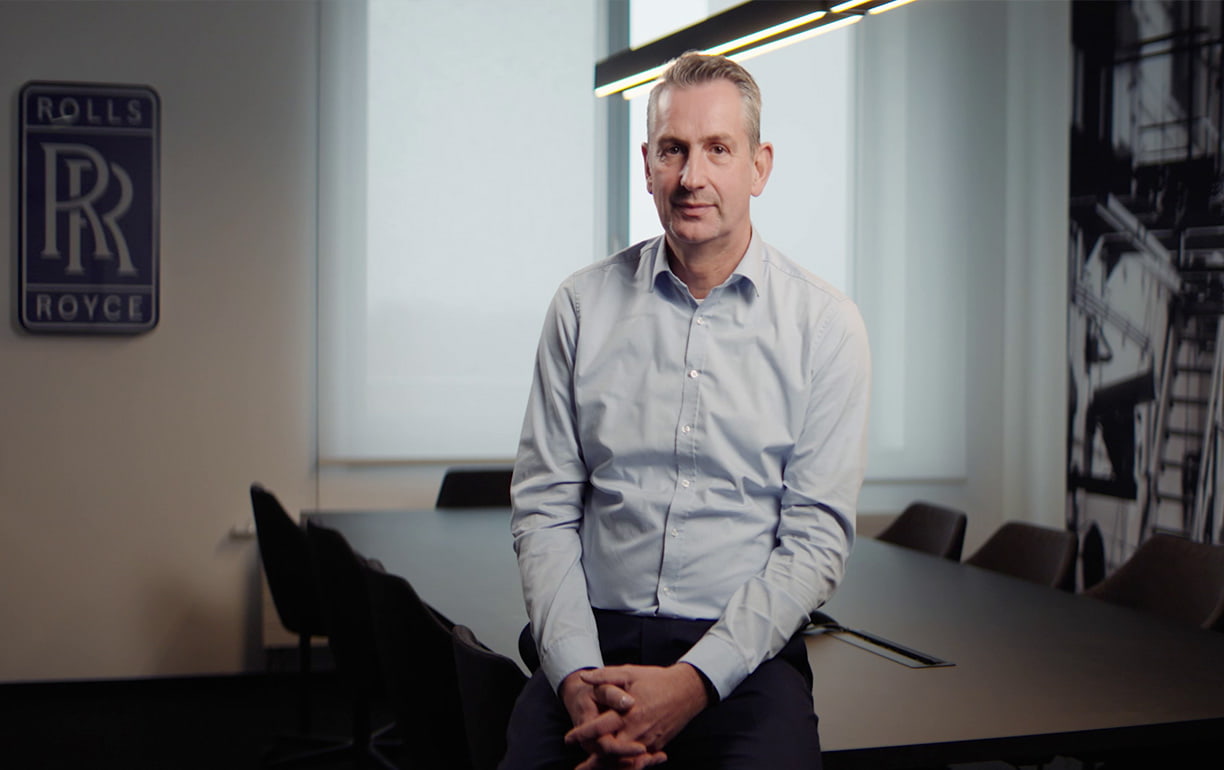
“An AOG can cost our customers their most valuable asset – their time,” explains Gregor Schmidt, Head of Aircraft Operations at engine manufacturer Rolls-Royce in Dahlewitz. And time quickly translates into money: In business aviation, costs per hour can rise to between 10,000 and 50,000 euros.
Rolls-Royce: Precision, Performance, and Prediction
Our first stop is Dahlewitz, south of Berlin. This is home to one of the most important sites of Rolls-Royce Germany – a center of excellence for twin-shaft engines as well as for the development and final assembly of the BR700 and Pearl engines.
In addition to production and maintenance, this site is also home to the Aircraft Availability Center, which provides round-the-clock support for approximately 9,000 engines worldwide. The center’s goal is to prevent downtime and return grounded aircraft to service as quickly as possible. For Rolls-Royce, this means real-time responsibility – especially for customers in the CorporateCare Enhanced program, who rely on maximum operational readiness and service. The service program covers both the engine and the nacelle – including the labor and travel time of a mobile team of mechanics.
“In our state-of-the-art Aircraft Availability Center, we monitor approximately 9,000 engines worldwide 24/7 and collect all information in one place,” says Gregor Schmidt, Head of Aircraft Operations at Rolls-Royce in Dahlewitz.
Rolls-Royce: Precision, Performance, and Prediction
|
Our first stop is Dahlewitz, south of Berlin. This is home to one of the most important sites of Rolls-Royce Germany – a center of excellence for twin-shaft engines as well as for the development and final assembly of the BR700 and Pearl engines. In addition to production and maintenance, this site is also home to the Aircraft Availability Center, which provides round-the-clock support for approximately 9,000 engines worldwide. The center’s goal is to prevent downtime and return grounded aircraft to service as quickly as possible. |
For Rolls-Royce, this means real-time responsibility – especially for customers in the CorporateCare Enhanced program, who rely on maximum operational readiness and service. The service program covers both the engine and the nacelle – including the labor and travel time of a mobile team of mechanics. “In our state-of-the-art Aircraft Availability Center, we monitor approximately 9,000 engines worldwide 24/7 and collect all information in one place,” says Gregor Schmidt, Head of Aircraft Operations at Rolls-Royce in Dahlewitz.
|
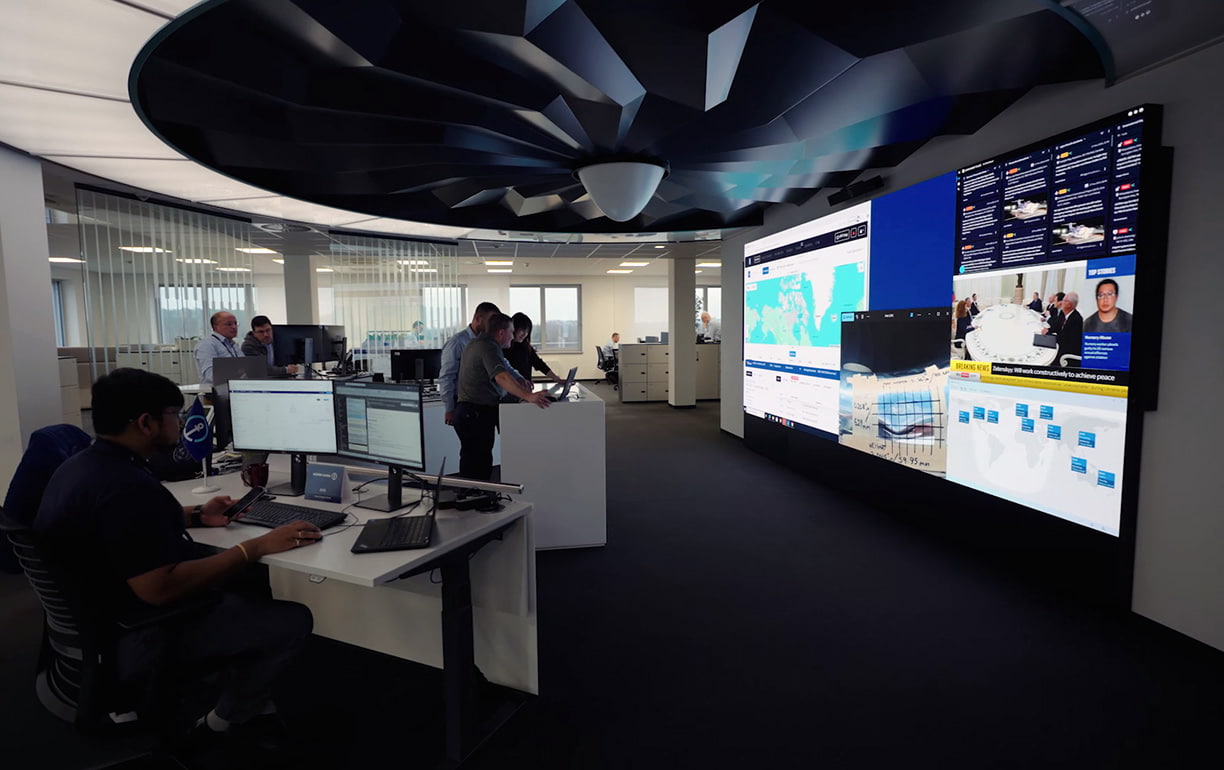
Data streams from all over the world converge here. Terabytes of information help identify anomalies early on, understand patterns, and resolve issues before they lead to a down-time.
But not everything can be predicted. “Bird strikes are probably the most common cause of engine damage and, unfortunately, are almost impossible to predict,” says Schmidt.
To keep an eye on external factors as well, a news feed runs on the screens in the Availability Center – supported by AI-analyzed information from the internet and international news channels. Rolls-Royce aims to be the first to know whenever a problem arises in air traffic or specifically with an engine anywhere in the world. “It’s not uncommon for us to already have the problem on our screens before a customer has even contacted us,” says Schmidt.
Speed thus becomes a decisive factor for success. “Our average return-to-service time is less than 24 hours. And we prevent over 99 percent of potentially missed flights worldwide,” says Schmidt.
Just how challenging these missions can be is illustrated by an example from a remote island off the west coast of Canada. “Once, we had to deliver an engine there in the dead of winter—including mechanics, tools, and a heated tent for the replacement,” recalls Schmidt. “Missions like these show just how flexible and creative we have to be.”
To ensure that no knowledge is lost in such situations, work processes are also designed for continuity. “We rotate the teams at the Availability Center every twelve hours so that the loss of information between employees is kept to a minimum,” explains Sebastian Uhe, Service Manager – Operational Service Desk at the Aircraft Availability Center. “Of course, in return, we receive extended time off.”
|
To keep an eye on external factors as well, a news feed runs on the screens in the Availability Center – supported by AI-analyzed information from the internet and international news channels. Rolls-Royce aims to be the first to know whenever a problem arises in air traffic or specifically with an engine anywhere in the world. “It’s not uncommon for us to already have the problem on our screens before a customer has even contacted us,” says Schmidt. Speed thus becomes a decisive factor for success. “Our average return-to-service time is less than 24 hours. And we prevent over 99 percent of potentially missed flights worldwide,” says Schmidt. |
Just how challenging these missions can be is illustrated by an example from a remote island off the west coast of Canada. “Once, we had to deliver an engine there in the dead of winter—including mechanics, tools, and a heated tent for the replacement,” recalls Schmidt. “Missions like these show just how flexible and creative we have to be.” To ensure that no knowledge is lost in such situations, work processes are also designed for continuity. “We rotate the teams at the Availability Center every twelve hours so that the loss of information between employees is kept to a minimum,” explains Sebastian Uhe, Service Manager – Operational Service Desk at the Aircraft Availability Center. “Of course, in return, we receive extended time off.”
|
Kuehne+Nagel: Logistics as the lifeline of aviation
While Rolls-Royce prepares the technical solution, Kuehne+Nagel ensures that it arrives exactly where it’s needed – quickly, safely, and at the right time. With more than 30 years of experience in aerospace logistics, the company supports customers throughout the entire aircraft lifecycle, from production to MRO processes.
“As demand in business aviation grows, so does the need for flexible, reliable solutions for global spare parts logistics,” explains Eric Foster, Vice President and Global Aerospace Strategic Customer Development Lead at Kuehne+Nagel.
When it comes to sensitive shipments such as spare parts or engines, every detail counts: certified processes, safe handling, and complete transparency. To achieve this, Kühne+Nagel works with specialized aerospace teams and regularly audited EN/AS9100-compliant services –with the goal of keeping downtime and production backlogs to a minimum.
Kuehne+Nagel: Logistics as the lifeline of aviation
|
While Rolls-Royce prepares the technical solution, Kuehne+Nagel ensures that it arrives exactly where it’s needed – quickly, safely, and at the right time. With more than 30 years of experience in aerospace logistics, the company supports customers throughout the entire aircraft lifecycle, from production to MRO processes. “As demand in business aviation grows, so does the need for flexible, reliable solutions for global spare parts logistics,” explains Eric Foster, Vice President and Global Aerospace Strategic Customer Development Lead at Kuehne+Nagel. |
When it comes to sensitive shipments such as spare parts or engines, every detail counts: certified processes, safe handling, and complete transparency. To achieve this, Kuehne+Nagel works with specialized aerospace teams and regularly audited EN/AS9100-compliant services –with the goal of keeping downtime and production backlogs to a minimum.
|
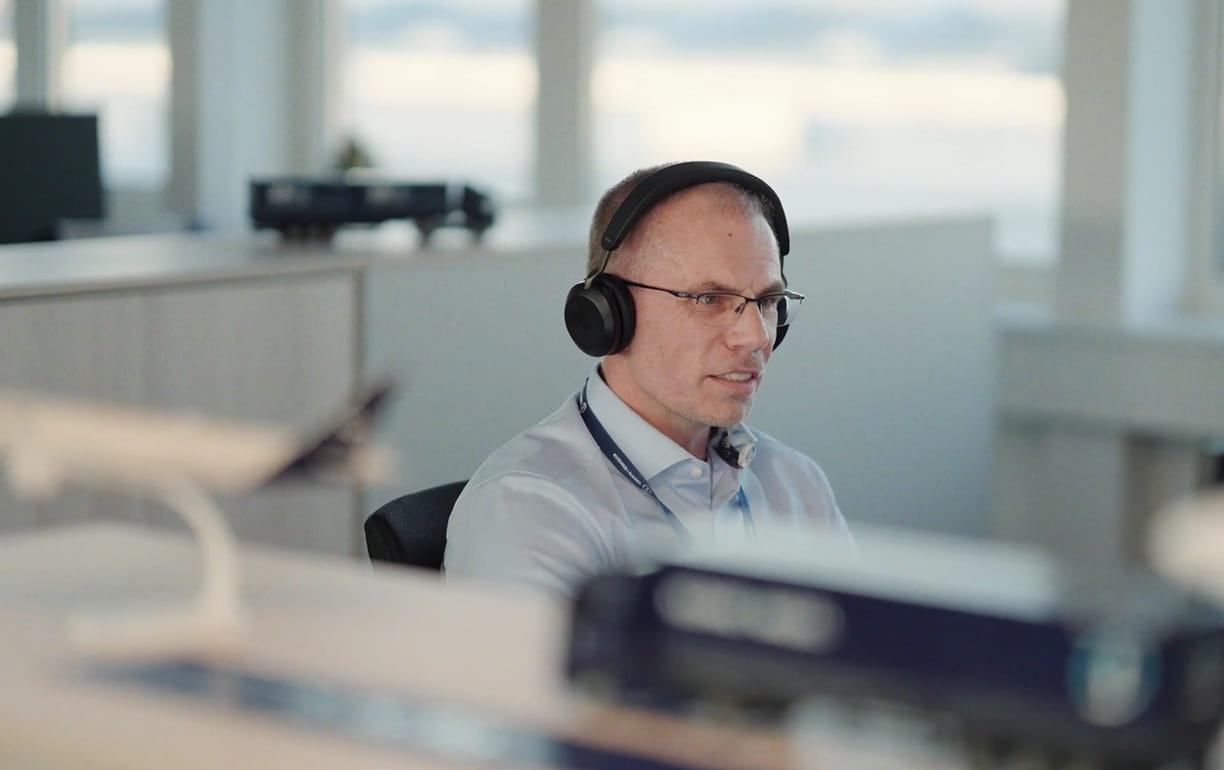
Maik Fischer, who heads the Air Logistics Aerospace Customer Care team in Berlin, knows just how fast things need to move: “Our teams deliver a suitable transport solution within minutes. This gives our customers a decisive time advantage.”
A particular advantage lies in the close integration: “As a logistics partner for Rolls-Royce, we have at least one person stationed directly at the Availability Center at Rolls-Royce’s Dahlewitz site,” says Proushat Mozaffari Gilani, Integrated Logistics Global Business Manager at Kuehne+Nagel. “This allows us to work hand in hand and respond immediately.”
This proximity continues at the airport, where Kuehne+Nagel and Lufthansa Cargo operate out of the same building. Open questions can be resolved in person and quickly – sometimes right across the desk, especially when every minute counts.
It is precisely these short lines of communication that make all the difference. While engineers prepare the technical solution, logistics teams are already planning the transport – in parallel, internationally, and often across multiple time zones. This means speed isn’t just achieved in the air, but begins with the collaboration on the ground.
|
A particular advantage lies in the close integration: “As a logistics partner for Rolls-Royce, we have at least one person stationed directly at the Availability Center at Rolls-Royce’s Dahlewitz site,” says Proushat Mozaffari Gilani, Integrated Logistics Global Business Manager at Kuehne+Nagel. “This allows us to work hand in hand and respond immediately.” This proximity continues at the airport, where Kuehne+Nagel and Lufthansa Cargo operate out of the same building. |
Open questions can be resolved in person and quickly – sometimes right across the desk, especially when every minute counts. It is precisely these short lines of communication that make all the difference. While engineers prepare the technical solution, logistics teams are already planning the transport – in parallel, internationally, and often across multiple time zones. This means speed isn’t just achieved in the air, but begins with the collaboration on the ground.
|
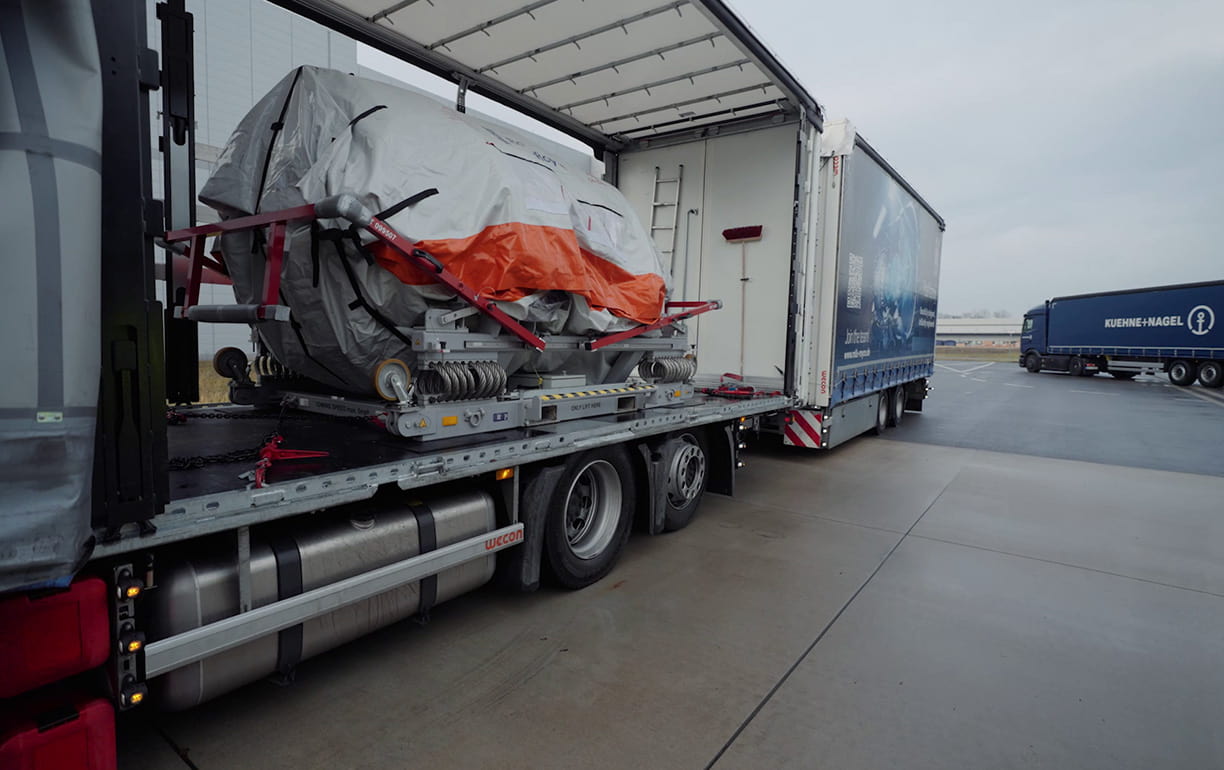
The Challenge: Size, weight, complexity
By the time loading begins, at the latest, it becomes clear why engine transport is a discipline of its own. An aircraft engine is heavy, sensitive, and ranks among the most valuable – and often the most urgent – pieces of cargo moved by air.
Paul Friesenhahn from Lufthansa Cargo’s Loadability Team knows what that means: “We receive 100 to 150 requests per month for heavy or bulky shipments. Engines are among the most common.” Last year alone, Lufthansa Cargo transported around 1,000 engines worldwide – many of them for Rolls-Royce and Kuehne+Nagel.
No two shipments are alike. Different engines require special transport racks, known as engine stands. Large models like the Rolls-Royce Trent 1000 require detailed lashing plans and are secured directly to the aircraftstructure.
“We carefully check whether the engine fits into the aircraft, whether the handling equipment at the airports is suitable, and whether special securing measures are necessary,” says Friesenhahn. Sometimes this also means that teams have to travel worldwide on short notice. Last month, the Loadability Team was in New York, Mexico, and Canada, among other places, to ensure the safe loading of large engines on site.
“Engine manufacturers often consult with us as early as the design phase because transportation must be considered from the very beginning – and Lufthansa Cargo’s expertise is valued even in the early planning stages,” adds Javier Salinas, Senior Manager of Industry Development Aviation. He serves as Lufthansa Cargo’s interface to the industry and Aerospace Vertical customers, and knows the sector inside and out.
|
Paul Friesenhahn from Lufthansa Cargo’s Loadability Team knows what that means: “We receive 100 to 150 requests per month for heavy or bulky shipments. Engines are among the most common.” Last year alone, Lufthansa Cargo transported around 1,000 engines worldwide – many of them for Rolls-Royce and Kuehne+Nagel. No two shipments are alike. Different engines require special transport racks, known as engine stands. Large models like the Rolls-Royce Trent 1000 require detailed lashing plans and are secured directly to the aircraftstructure. |
“We carefully check whether the engine fits into the aircraft, whether the handling equipment at the airports is suitable, and whether special securing measures are necessary,” says Friesenhahn. Sometimes this also means that teams have to travel worldwide on short notice. Last month, the Loadability Team was in New York, Mexico, and Canada, among other places, to ensure the safe loading of large engines on site. “Engine manufacturers often consult with us as early as the design phase because transportation must be considered from the very beginning – and Lufthansa Cargo’s expertise is valued even in the early planning stages,” adds Javier Salinas, Senior Manager of Industry Development Aviation. He serves as Lufthansa Cargo’s interface to the industry and Aerospace Vertical customers, and knows the sector inside and out.
|
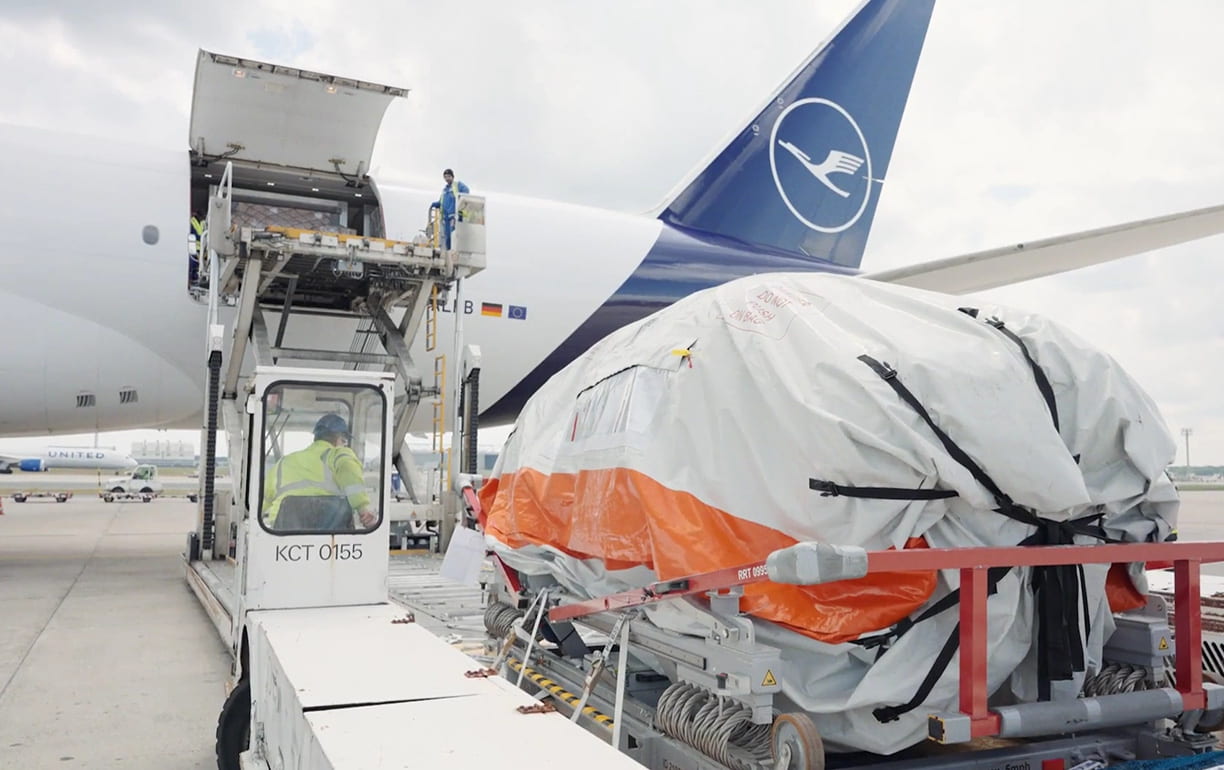
The perfect aircraft for exceptional cargo
Ultimately, the right aircraft is also key to speed and feasibility. Lufthansa Cargo’s Boeing 777F really shines here: a large cargo door, high payload capacity, and an extensive route network radiating from the heart of Europe to over 50 freighter destinations worldwide.
“It’s always something special when our aircraft transport exactly what keeps them in the air –and what keeps our business running: engines. Our Boeing 777F can even carry engines designed for aircraft larger than itself,” explains Janez Kopping, Head of Sales Germany East at Lufthansa Cargo.
What looks like a single transport order on paper is, in reality, a race against time – driven by people who know exactly what’s at stake. At Rolls-Royce, technical challenges are identified, assessed, and resolved in real time. Kuehne+Nagel transforms this urgency into a resilient global logistics chain. And Lufthansa Cargo, with its experience, network, and cargo expertise, delivers even the most extraordinary cargo safely and quickly to where it’s urgently needed.
Performance, precision, partnership – three teams, one mission: getting people, markets, and opportunities moving again.
Would you like to learn more about how Lufthansa Cargo moves time-critical aerospace shipments worldwide? Contact us at [email protected] or get more information here. Together, we’ll get even your most demanding cargo to its destination safely, quickly, and reliably.
|
“It’s always something special when our aircraft transport exactly what keeps them in the air –and what keeps our business running: engines. Our Boeing 777F can even carry engines designed for aircraft larger than itself,” explains Janez Kopping, Head of Sales Germany East at Lufthansa Cargo. What looks like a single transport order on paper is, in reality, a race against time – driven by people who know exactly what’s at stake. At Rolls-Royce, technical challenges are identified, assessed, and resolved in real time. Kuehne+Nagel transforms this urgency into a resilient global logistics chain. |
And Lufthansa Cargo, with its experience, network, and cargo expertise, delivers even the most extraordinary cargo safely and quickly to where it’s urgently needed. Performance, precision, partnership – three teams, one mission: getting people, markets, and opportunities moving again.
|
